
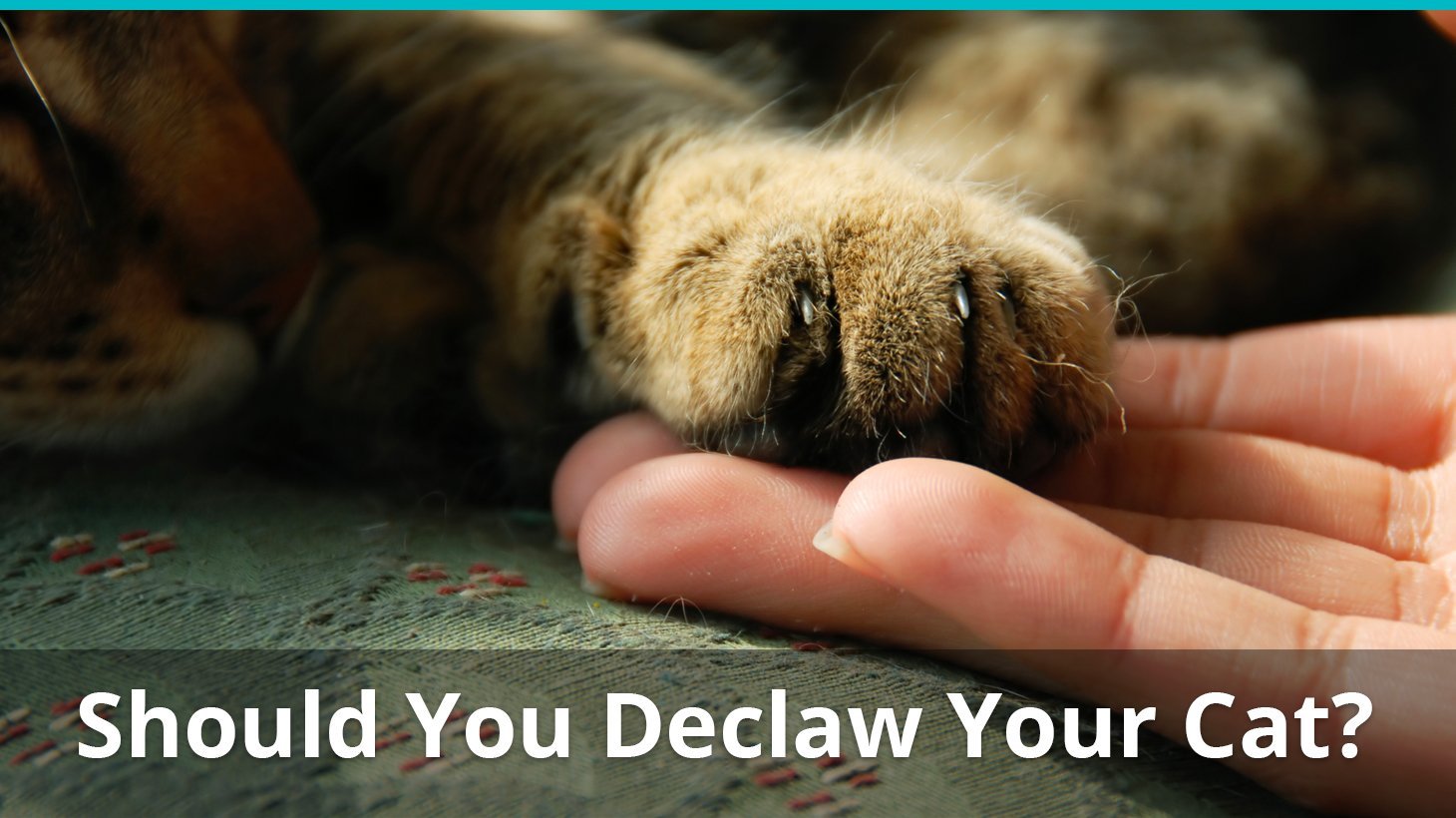
Cats can be a pain in your neck on daily basis due to their mischievous and sometimes destructive ways. They tend to act out, demand attention, create unpleasant messes, scent-mark your home…the list goes on and on.
One of the most common problems pet parents have to deal with is their cats’ compulsive scratching.
Regardless of the fact that you’ve bought a scratching post, your cat can still claw at your furniture, at your skin, at your doors and even at your clothes. And when the scratch marks become too painful and too unsightly, you eventually start asking yourself – should you declaw your cat?
The answer is NO!
Onychectomy, a.k.a. declawing, is a surgical procedure, which doesn’t mean removing only your kitty’s claws. It’s not equal to removing a person’s nails. The surgery actually clips part of your fluffy pal’s bone.
Declawing a cat would be equal to removing a human being’s fingertips and cutting off his/ her fingers all the way to the first knuckles.
Sounds painful, doesn’t it? Not only is it indeed painful, but declawing is actually equal to maiming your cat for the rest of its lifetime. It’s also illegal in numerous countries, including New Zealand, Japan, and Australia.
Do Not Declaw Your Cat: Reasons Why It’s Bad And Unsafe
Here are just some of the main reasons as to why you shouldn’t subject your feline friend to the horrendous procedure.
Maiming
Declawing is literally amputating your cat’s paw bones. Unless your pet has received severe injuries from having polydactyl paws, removing its claws will maim it. A feline’s claws are its first line of defense against any form of danger. Not only will you be cutting its toes, but you will also be depriving it from its inborn defense instincts.
Pain
Even though the vet will tell you that the cat will recover from the surgery, the declawing procedure isn’t just any type of surgery.
The recovery process doesn’t end with coping with the pain and regaining consciousness after the anesthesia has worn off. The physical pain continues long after the surgery. What’s more, it’s possible in some rare cases for the claws to start growing back inside the paws beyond the point of visibility. Needless to say, this will be excruciating for the cat.
On top of that the maimed kitty will need to learn how to walk properly all over again. It will also need to learn how to grip onto something and use its paws for even the simplest daily activities such as play sessions. Until it learns how to handle its body, everything will be painful and confusing to it.
Emotional Injury
Even after the physical pain has passed, the emotional trauma will keep tormenting the kitty. Apart from the fact that it won’t be able to defend itself, it will also feel emotionally and physically unstable.
The feelings of vulnerability and insecurity will overcome your pet to such an extent that it may go through stress, severe depression and lethargy. Needless to say, all of these negative feelings can lead to physical health-based disorders.
Disrupted Daily Routine
When cats scratch, they do a lot more than just leave scratch marks. They stretch and exercise multiple muscles in their bodies. They also sharpen their claws and keep them well-maintained by removing the dead skin cells from the claws’ outer layers.
Declawed cats can’t play, exercise, walk and perform physical activities properly. Not only does this harm them on an emotional level, but it can also make them obese. What’s more, the vulnerability and instability can completely disrupt their daily routine of eating and using the designated litter box. Declawing your pet means it won’t lead a normal, fulfilling and happy life on daily basis.
What Can You Do Instead Of Declawing Your Cat?
Instead of subjecting your precious furball to physical and emotional scars for the rest of its life, you can opt for several alternatives to declawing.
Use Vinyl Nail Caps
Vinyl nail caps are cheap, easy to place, and prevent the kitty from leaving scratch marks. They’re basically just little nibs that you put over each claw on your kitty. However, they will also prevent your pet from exercising, grooming its nails and scent-marking with its paws properly.
Invest In Scratching Surfaces
If one scratching post isn’t enough to keep your pet occupied, opt for investing in more. Some cat trees offer scratching surfaces. And some toys like the Bergan Turbo Scratcher come with scratching pads too. The more cat-related furniture your fluffy pal has, the less temptation it will get to ruin your own furniture pieces.
Trim The Claws
Learn how to trim your kitty’s nails. It’s not rocket science and if you’re patient and careful, your cat won’t attack you. Apart from trimming the claws, you can also file them. You can either use a regular nail filer or you can get an automatic one. As long as it’s not too noisy or too big for the cat’s claws, it will do the trick.
Encourage The Cat To Use The Scratchers
Your cat won’t know what it’s supposed to do and what not if you’re being negligent towards house rules. Encourage your pet to use the designated posts and pads by making them more appealing. Use the positive reinforcement techniques when training it. Don’t punish the kitty. Instead, use catnip sprays, treats and verbal praising whenever it’s clawing at the desired surface.
Additionally, you can make your sofa, upholstery and everything else the cat should stay away from less appealing. There’s a plethora of strips and sticky rolls by manufacturers like Sticky Paws, which will discourage the cat’s attempts to claw at your furniture. Motion-activated sprays, squirt guns and citrus fragrances will also make the cat associate destructive scratching with a bad idea.
